Category: <span>Trading and Quantitative Research</span>

Reinforcement Learning for Bond Allocation in Global Pension Fund Portfolios

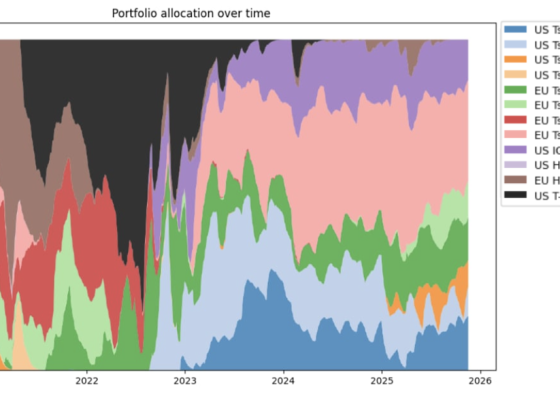
In this project, supervised by Tredje AP-fonden (AP3), the analysts Edvin Gunnarsson, Victor Mikkelsen and Carolina Oker-Blom explore whether Reinforcement Learning (RL) can optimize global bond allocations by dynamically balancing duration and credit risk. Using the Proximal Policy Optimization (PPO) algorithm combined with PCA-based dimensionality reduction, they develop an agent designed to adapt to shifting market regimes and complex macroeconomic conditions.
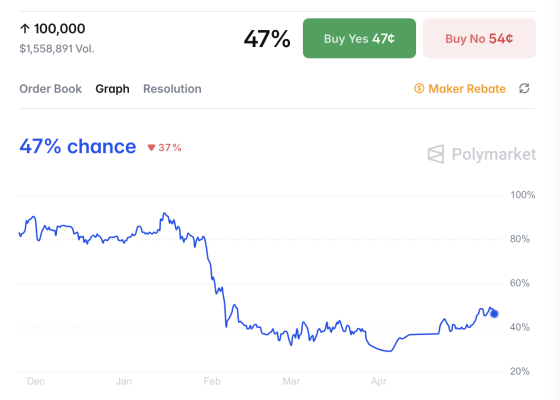
What price will Bitcoin hit in 2025?

In this project, analysts Carl Nordahl, Alexander Ihrfelt and Alfred Hultgren investigate whether crypto prediction market contracts can be valued using traditional derivatives pricing methods. Focusing on Polymarket contracts tied to the question “What price will Bitcoin hit in 2025?“, they model the contracts as one-touch barrier options and compare a closed-form approximation with a Monte Carlo framework using EWMA volatility and jump-diffusion dynamics.

Portfolio Optimization and Shrinkage

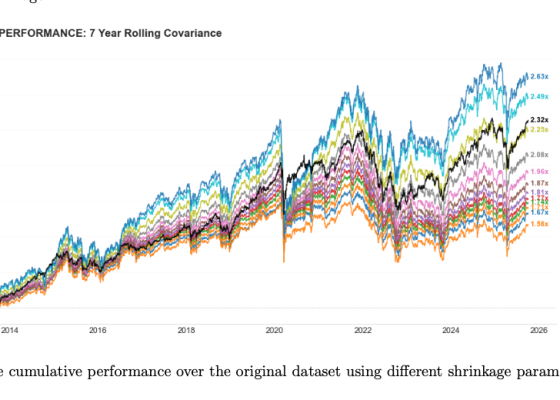
In this project, supervised by AP3, analysts Alexander Nilsson, Peder Persson, and Samuel Eriksson investigate whether Mean-Variance Optimization (MVO) can be enhanced by shrinking the off-diagonal elements of the covariance matrix. Utilizing a 20-year dataset, they backtest models incorporating spectral filtering and shrinkage techniques to assess the robustness and practical feasibility of the optimization process.

Regime-Dependent Macro Exposures in Emerging Market Bond ETFs

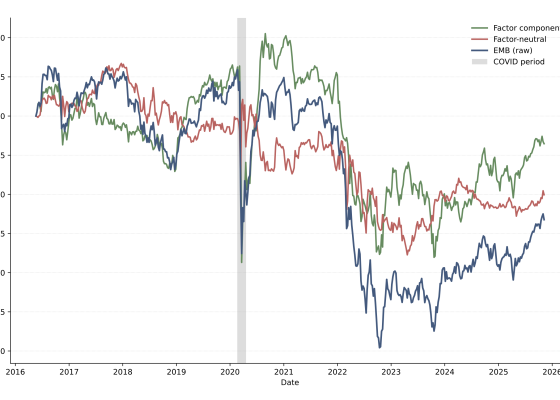
In this project, supervised by OQAM, analysts Vilhelm Hilding, Jacob Fransson and Dag Vallien investigate how global macro conditions drive the returns of two emerging market bond ETFs: EMB (USD-denominated) and EMLC (local-currency). Using a rolling linear factor model, they estimate time-varying exposures to equity markets, US dollar strength, interest rates, credit sentiment, commodities, and volatility across a 10-year period.

Impact of Earnings Calls on Short-Term Price Volatility

In this project supervised by Lynx, analysts Alexander Degener, Axel Ahlqvist, and Lukas Schuon investigate how sentiment in earnings calls affects the short-term movement of stock prices. The study examines the relationship between the sentiment expressed during the calls and excess returns across different time windows.

Finding Alpha

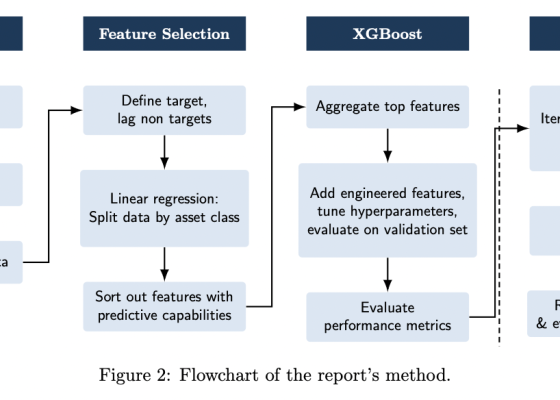
In this project supervised by OQAM, the analysts Olivia Lahtinen, Behdad Nikfarjam, and Douglas Eklund explore whether machine learning techniques can uncover pricing inefficiencies in the Nordic covered bond market. Using a Random Forest model, they aim to predict movements in five-year Swedish covered bond yields.

FX Optimization

In this report, analysts Lisa von Ahnen, Samuel Lerjestad and Angelo Sun investigate whether there are ways for companies to optimise their foreign-currency management using FX swaps. Using FX swap pricing data, interest rates for each currency and synthetic account balances, they simulate the benefits of FX swaps in different scenarios and determine optimal transaction decisions.

Overnight Reversals

In this project supervised by OQAM, the analysts Dag Palmstierna, Denis Zernov and Magnus Drøyvold explore the existence and predictability of overnight reversals in the European high-yield bond market. By using a Random Forest machine learning model, they were able to predict significant share of overnight reversals in the European high-yield bond market. This supports the hypothesis that such reversals are not only present in equities, but also extend to credit markets.

Systematic Drivers

In this investigation conducted with OQAM, the analysts Jaroslavs Grigoluns, Merriea Mathew, and Elliot Koujaharov Sjögren, analysed which factors drive the spread differences of bonds issued in both EUR and SEK. By examining a large number of both company-specific and macroeconomic features with different machine learning methods, the project distilled the most influential contributions to the historical spreads.